
Why AI won't replace Data Scientist?
October 14, 2025
Why AI won't replace Data Scientist?
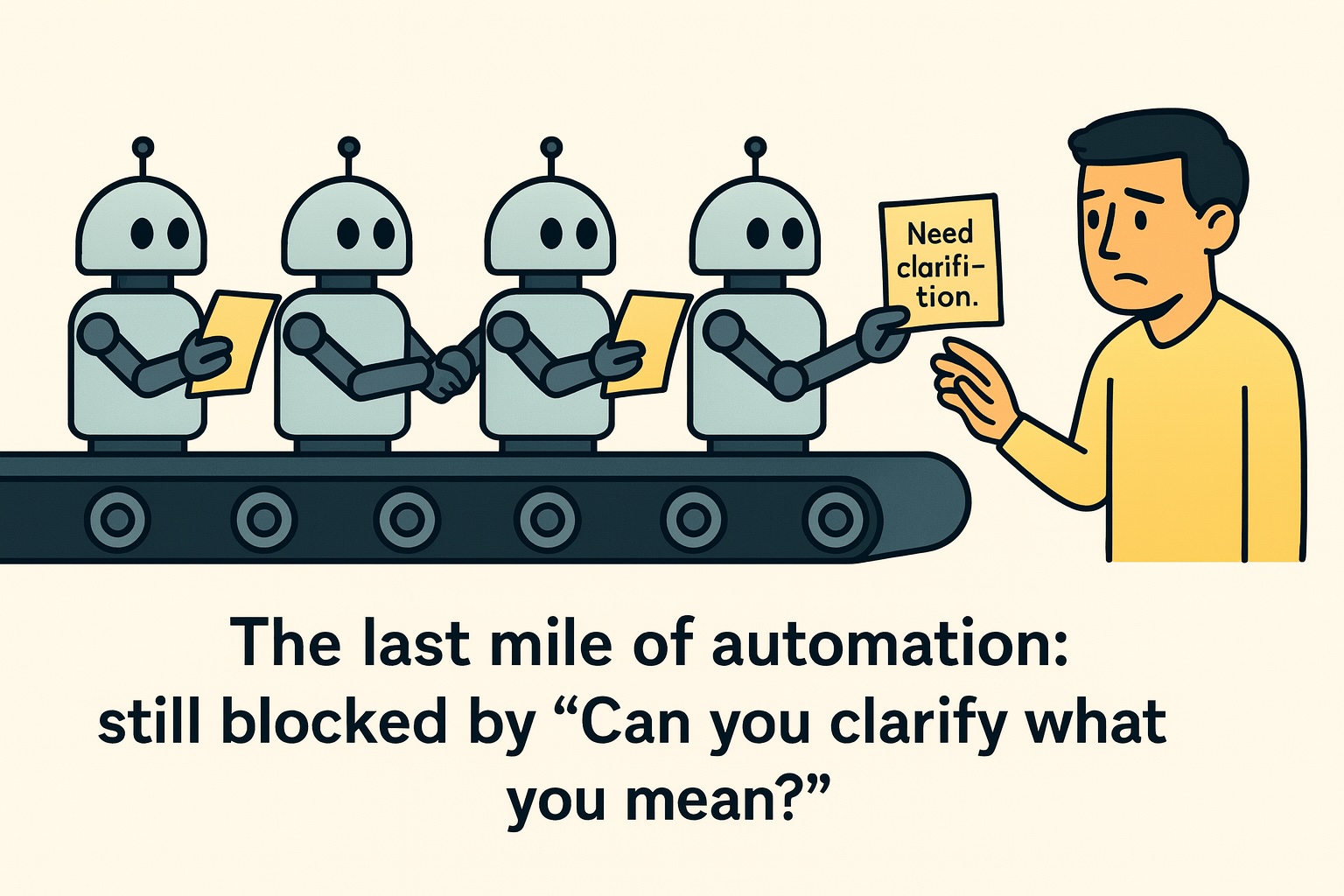
1. The survival crisis#
Every time a new automation tool appears — from AutoML to GPT-powered analytics — we hear the same prophecy: “Now we can automate data science.”
And at first glance, it seems true. AI can clean data, run regressions, generate charts, write SQL, even summarize dashboards in plain English.
But what we call data science has always been more than computation.
It’s the art of turning ambiguity into structure — and that’s a uniquely human process.
The moment you look beyond the pipeline into the conversation —
- “What question are we really answering?”
- “Why does this metric matter?”
- “What if the assumption is wrong?”
- “What trade-offs are acceptable for this business context?”
you realize that most of data science happens before and after the analysis itself.
AI is great at executing analysis. Humans are still essential for deciding what’s worth analyzing in the first place.
AI can tell you what’s in the data. Only humans can tell you what’s behind the data.
So no — AI won’t replace data scientists. It will just push them closer to what truly matters: asking better questions.
2. Exploration vs execution#
In the data world, there are two fundamentally different modes of thinking:
- Execution: The analytical mode. Clear input, clear output. You know what you’re calculating, and success is defined.
- Exploration: The conversational mode. You don’t know what matters yet. You wander through the data, form hypotheses, get surprised, refine questions.
AI is amazing at execution. It thrives on explicit goals and structured tasks.
But exploration is messy, uncertain, and contextual.
Exploration isn’t just “running analysis” — it’s deciding which analysis matters, and interpreting why the result looks that way.
It’s a dialogue between curiosity and evidence.
And that dialogue still requires human interpretation — not because AI lacks power, but because it lacks purpose.
2.1 What is special with exploratory analysis?#
In data exploration:
- You don’t fully know the question yet — you’re probing, hypothesizing, discovering patterns.
- Your boss and colleagues do not fully know the question or cannot fully explain the question either. You need to discuss, build and iterate with them.
- Ambiguity is part of the process: your “task” keeps evolving as you learn.
- Only the human knows what “interesting,” “weird,” or “important” really means in the context.
2.2 The pain points#
Many data analytics tools are user-friendly and productive, but they often lack the flexibility needed for true data exploration. When exploring, you frequently end up writing ad-hoc scripts and performing tedious manual steps.
Exploration is about answering a constant stream of small evolving questions. Each script may only take a few minutes to write, but the interruptions pile up. They break your flow state, drain your energy, and slow down the progress.
3. How SmooSense helps#
SmooSense automates 80% of repetitive exploratory analysis, while making it easy to plug in your own scripts for the rest.
It works directly with popular data formats — CSV, Parquet, JSONL, Lance — whether they live on your laptop, in S3, or in other cloud storage.
3.1 ❤️ A GUI carefully designed for data professionals#
- Customizable on the fly — rearrange, maximize, close, and resize at will
- Light and dark modes — reduce eye strain
- Clean information architecture — details are always one click away
3.2 😀 Automated common operations in your daily work:#
- Quick file previews — open CSV, Parquet, YAML, JSON without downloading from S3
- Instant column insights — visualize distributions with zero setup
- Interactive slice-n-dice - search, sort, and filter with real-time visual updates
- Drill-through — jump from high-level plots to specific samples
- Native media support — images, videos, and domain-specific visualizations
- Cross analysis — view relationships between two columns and explore related samples
- Shareable context — capture and share your current exploration state with a link
3.3 📈 Scale to billions of rows and hundreds of columns#
- Column customization - search/rearrange/hide columns to focus on what matters to you.
- Efficient large file handling - inspect 10GB parquet, 500MB+ JSON or CSV files without freezing your laptop
- Visualization and sampling - specially designed plots and sampling works on billion level data points.
3.4 How it works#
SmooSense translates your GUI interactions into SQL queries, executes them with a high-performance query engine, and returns results as interactive visualizations.
3.5 Get started#
You can run SmooSense on your laptop. Your data stays in your control.
pip install smoosense4. The future role of the data scientist#
The data scientist of tomorrow will not spend their time writing boilerplate code or tuning parameters. Those parts are already being automated.
Instead, they will focus on:
- Framing the right questions
- Evaluating model trustworthiness
- Guiding organizational understanding
They’ll be less like coders, and more like navigators — steering through complexity with a compass of curiosity and critical thinking.
AI can crunch numbers faster than any human, but understanding requires seeing, not just calculating.
That’s why a transparent data interface matter more than ever. They bridge the gap between the human and the machine, between exploration and execution.
Tools like SmooSense aim to make this bridge seamless — turning data into an interactive conversation, not a black box.